
FEATURED E-LEARNING COURSE DESIGN
Are We In Control of Our Technologies?
Technology changes how we socialize, learn, and even work. Now, AI can produce results that look human-made, even though machines don't think or feel like we do. This shift raises real concerns about jobs: Will AI replace us?
This course helps explore one's own relationship with AI, rediscover human worth beyond work, and reimagine how people and AI can build good future(s) together.
-
AI anxiety is not simply a knowledge gap. It is a meaningful learning opportunity. A 2025 Pew Research Center study found that 52% of U.S. workers are worried about AI’s impact on their jobs, 33% feel overwhelmed, and 36% remain hopeful.
Curious young adults, students, career switchers, and early- to mid-career professionals experience fear, information overload, and productivity-based self-judgment. There is difficulty in identifying where personal and collective agency still exist. Concerns about job security, privacy, inequality, and workplace disruption seem to be urgent.
-
The course is designed for the Reluctant Cyborg persona. Rather than targeting a single job title, this addresses a shared condition: students and early- to mid-career professionals are asked to adapt to AI despite differing levels of knowledge, power, and access. Learners need more than technical explanations; they need support distinguishing evidence from prediction and fear from opinion.
In a 60-minute, self-paced Articulate Rise experience, learners move through four actions: notice how technology shapes daily life; question what they hear about AI; reclaim human worth beyond work productivity; and imagine a preferred future. -
By the end of the course, learners will be able to respond to an AI-related concern or claim with greater reflection and intention. They will identify how technology affects their lives; distinguish what is known from what is predicted or uncertain; recognize the human value at stake; and choose one values-aligned action or preferred-future commitment.
The goal is not technical AI mastery and total control over technology. It is to support a more human-centered relationship with AI. Learners should leave understanding that technological futures are shaped by people, institutions, policies, and collective choices — not by technology alone.
I focus on purposeful creativity.
I pick tools that fit the learner's needs and the project's budget, without adding time-consuming elements that do not meaningfully improve the learning experience.
TOOLS USED
Articulate Rise
Mighty
ElevenLabs
Higgsfield
Perplexity
Claude
Canva
CapCut
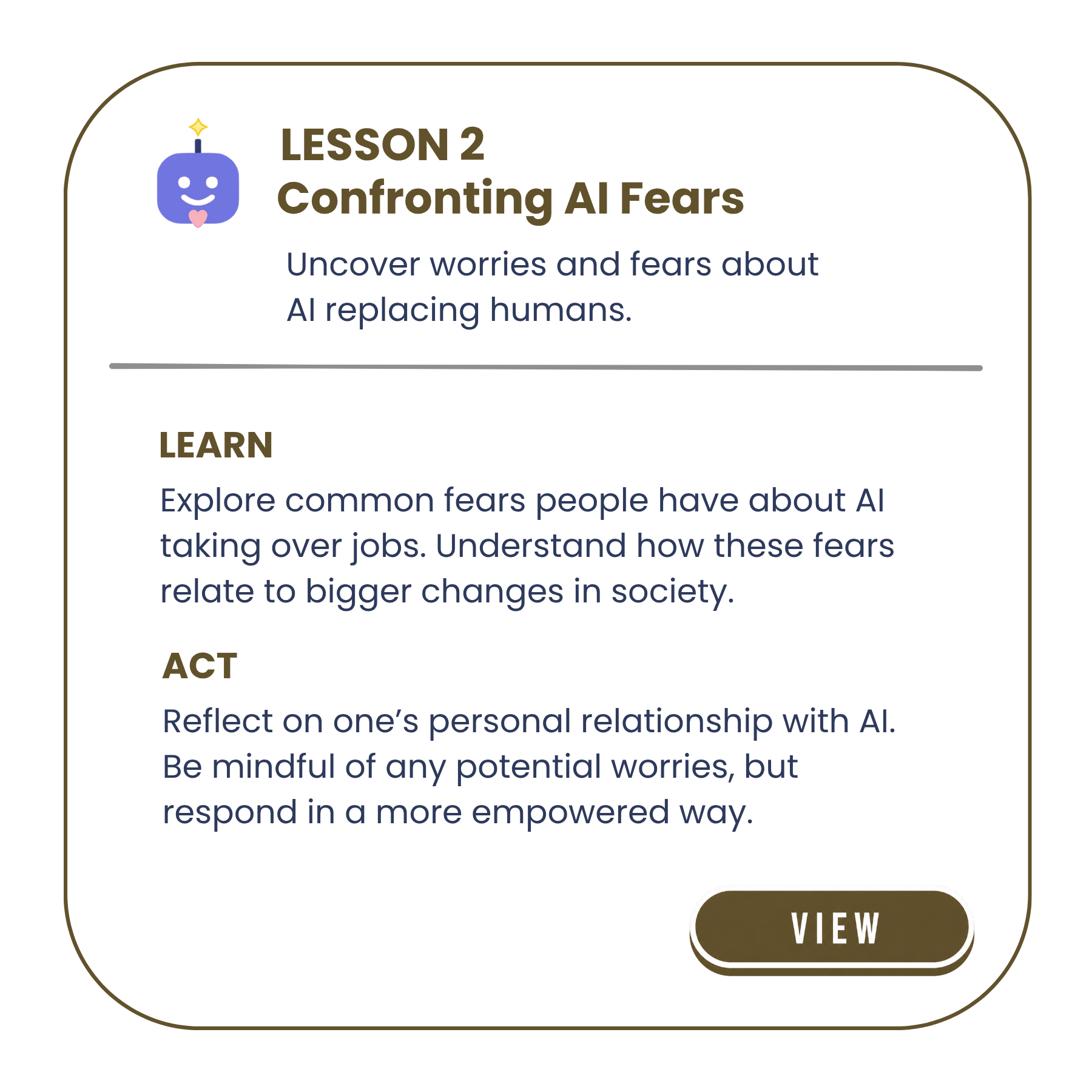
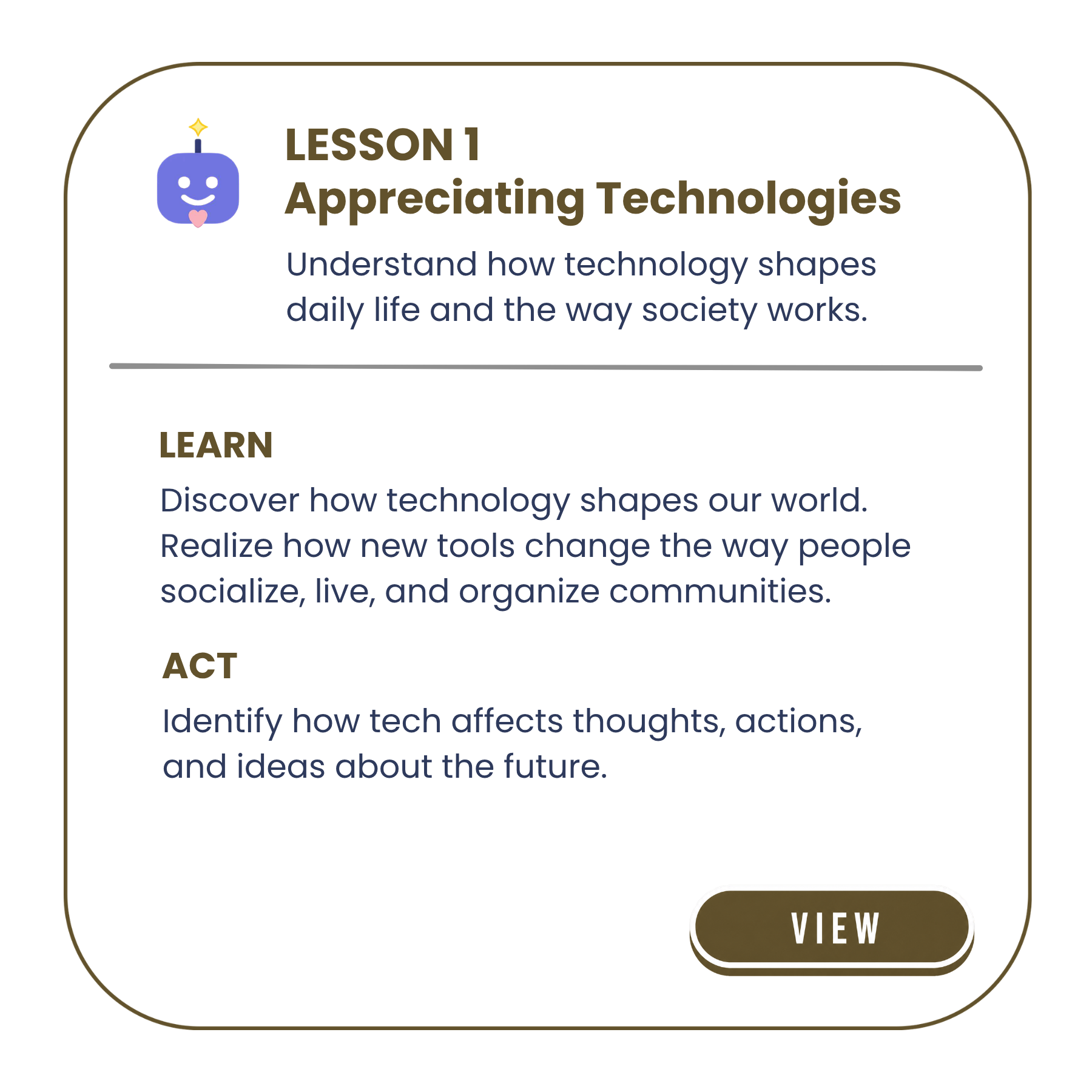
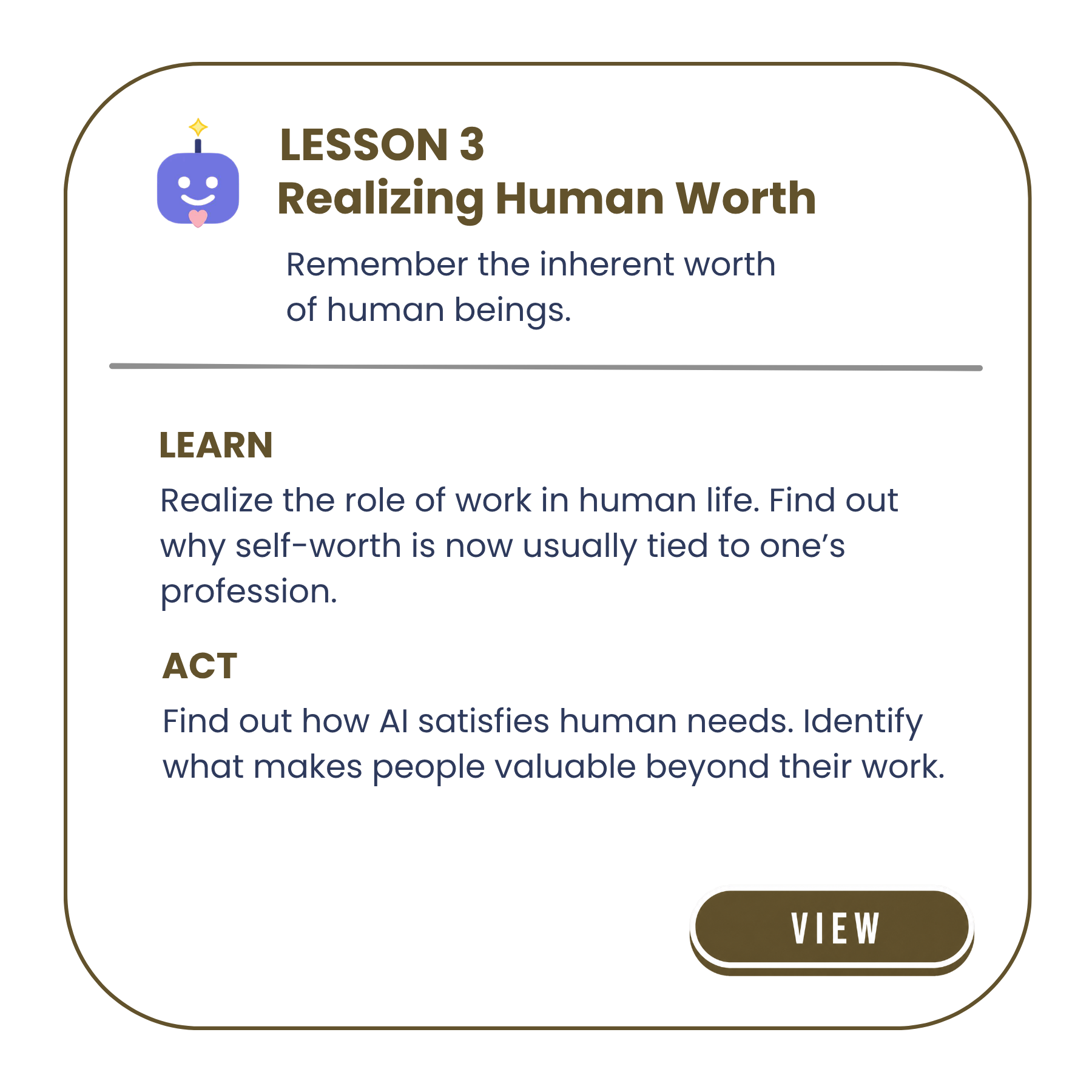
Lesson Overview
Want more info about the project?
For further details about this course, explore the raw project notes in my personal Notion knowledge base. Click the button below.
